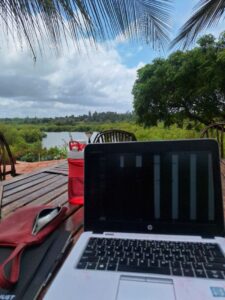

Remote work in Africa is no longer a distant dream. Thousands of professionals across the continent are landing international roles, earning in foreign currencies, and building careers that were simply not possible a decade ago. The internet has genuinely levelled the playing field, opening doors that once felt out of reach.
However, there is a part that most “work from home” conversations leave out. The moment you decide to pursue remote work, you stop competing with people in your city or even your country. You are now competing with talent from all over the world—people who have studied at top global universities, worked at recognized international companies, and built experience in highly competitive environments.
This reality is not meant to discourage you. If anything, it should help you approach remote work with more clarity. Once you understand the level you are playing at, you can start preparing in a way that actually positions you to win.
Why Remote Work Requires a Different Mindset
Before focusing on strategies, it is important to address the mindset shift that remote work demands. Many people are used to job markets where geography naturally limits competition. You apply for roles alongside people within your environment—people with similar exposure, opportunities, and access.
Remote work removes that advantage completely.
When a company in San Francisco, Amsterdam, or Singapore posts a remote role, they receive applications from India, Eastern Europe, Latin America, Southeast Asia, and yes — Africa too. Every single one of those applicants is making a case for why they deserve that opportunity. The company does not owe anyone the job. They are looking for the best fit, globally. That means your competition is no longer defined by your location but by global standards.
Understanding this changes how you approach everything—from how you learn skills to how you present yourself. It pushes you to stop thinking locally and start positioning yourself globally.
Step 1: Build a Skill the Global Market Will Pay For
If you want to succeed in remote work, you need a skill that creates value beyond your location. The good news is that there are many entry points into the remote world today. Fields like content creation, digital marketing, design, writing, software development, customer support, virtual assistance, and data analysis continue to offer opportunities for skilled professionals.
The challenge, however, is not choosing a field—it is maintaining focus.
Many people make the mistake of trying to learn everything at once. They move from one skill to another without going deep enough to become truly valuable in any of them. In the remote market, that approach rarely works. Employers are not looking for someone who knows a little about everything; they are looking for someone who can solve a specific problem well.
The goal, therefore, is to choose one skill and commit to mastering it. When you become genuinely good at something, it becomes easier for people to trust you, recommend you, and pay you.
Step 2: Fix Your Resume and Portfolio
Your resume is one of the most important tools you have, but it is often misunderstood. It is not a place to document your entire life history. International employers are not scrolling your CV looking for the name of your primary school, your high school, or even your local university unless it carries genuine global recognition.
What they want to see quickly and clearly is:
- What can you do?
- What problems have you solved?
- What results have you produced?
This means your resume should focus on relevant skills, real experience, and measurable outcomes. If you worked on a project, highlight the results. If you supported a client, show the impact of your work. Keep it concise, clear, and focused on value.
Your portfolio is just as important, especially if you are in a creative or technical field. A strong portfolio provides proof of your abilities. It allows potential employers to see your work instead of just reading about it. Over time, your portfolio becomes one of your strongest assets in securing remote opportunities.
Your LinkedIn profile should also reflect where you are going, not just where you have been. It should communicate your value clearly and position you for the kind of opportunities you want.
Step 3: Build Relationships Before You Need Them
One of the most underestimated strategies in remote work in Africa is intentional networking. Most opportunities in the remote world do not come through job boards. They come through relationships.
Think about it: a hiring manager who has already seen your LinkedIn comments, read your posts, and interacted with your ideas is far more likely to think of you when a role opens up than someone who applies cold from a stranger’s email.
Start now. You do not need to already be working remotely to begin building your network.
- Follow and engage with professionals in your target industry on LinkedIn, Twitter/X, and Slack communities.
- Attend virtual events, webinars, and online conferences — many are free and globally accessible.
- Join remote work communities. Platforms like Remote Work Africa, We Work Remotely forums, and various Discord servers are full of people on the same journey.
- Comment thoughtfully on posts from people doing the work you want to do. Not just “Great post!” — add insight, ask a question, share a perspective.
Build relationships before you need them. The best time to network is when you are not desperate for a job. Plant seeds consistently, and when opportunities emerge, you will already be known.
Step 4: Set Up Your Remote Work Environment Properly
This step gets overlooked far too often, especially by those just breaking into remote work in Africa. But your environment directly affects your performance — and your reputation.
Before you land your first remote role, take time to set up properly:
Internet Connection
Test your connection speed and reliability. Remote work depends on it. If your home connection is unstable, identify backup options — a reliable café, a co-working space, or a mobile data plan that can carry you through emergencies. Dropped calls and laggy video meetings are not just inconvenient; they signal to employers that you are not prepared.
Your Workspace
You do not need a fancy home office. But you do need a clean, distraction-free environment. A tidy background on video calls communicates professionalism. Good lighting makes you appear present and engaged. These are small things that, collectively, shape how international teams perceive you.
Collaboration Tools
Get comfortable with the tools remote teams use: Slack for communication, Notion or Confluence for documentation, Trello or Asana for project management, Zoom or Google Meet for video calls. Familiarity with these tools is often assumed — being a step ahead signals that you are ready for the environment on day one.
These small details may seem minor, but they have a direct impact on your performance and how seriously you are taken as a remote professional.
Step 5: You Represent More Than Yourself
This is perhaps the most important and least discussed aspect of remote work in Africa.
Remote companies hire individuals. But they do not always judge individuals in isolation. Over time, they develop perceptions about entire regions based on the collective experiences of the workers they have hired from those regions.
This is uncomfortable to acknowledge, but it is real.
Poor communication, missed deadlines, lack of professionalism, or worst of all, disappearing after receiving an advance or a first payment can damage the reputation of an entire professional community. One bad experience can make a company hesitant to hire from Kenya, Nigeria, Ghana, or anywhere else again. And when that happens, it does not just hurt the person who broke the trust. It hurts every qualified, hardworking professional who comes after them.
While this may not seem fair, it is the reality of how global hiring sometimes works.
This is why professionalism is critical. Clear communication, reliability, consistency, and accountability are not optional—they are essential. When you deliver quality work and maintain high standards, you are not only building your own reputation but also creating more opportunities for others.
The Long Game: Remote Work in Africa Is Just Getting Started
The remote work industry is not slowing down. If anything, the normalization of distributed teams post-2020 has permanently shifted how global companies think about hiring. African talent has a genuine window right now — a moment where the demand for skilled remote workers is high and the infrastructure to support them is improving rapidly.
But windows do not stay open forever.
The professionals who will benefit most are not those who simply want to work remotely. They are the ones who approach it with the seriousness of someone entering a global arena. Who raise their standards. Who build real skills. Who show up with consistency and professionalism. Who understand that every interaction is an audition, not just for themselves, but for the community of talent they represent.
Remote work in Africa is a real, transformative opportunity. It can change your income, your career trajectory, your lifestyle, and your sense of what is possible.
But it will only reward those who are willing to compete, genuinely, excellently, and with integrity at a global level.
Quick-Start Checklist: Are You Remote-Ready?
Before you send that next application, run through this list:
I have identified one high-demand skill and I am actively developing it
My resume focuses on impact, results, and relevant experience
My LinkedIn profile is optimized and up to date
I have a portfolio that showcases my best work
I am actively engaging in at least one online professional community
My internet connection is reliable, with a backup plan
My workspace is clean, professional, and camera-ready
I am familiar with at least two remote collaboration tools
I understand the responsibility I carry as a representative of African talent
If you checked most of those boxes , you are closer than you think. If you didn’t now you know exactly where to start. Check out this Video on I made on how you can get started. Watch Here
Learn From My Journey
If you want a more personal perspective on what building a remote career looks like, I’ve shared my experience working with international clients here:
👉 Life as a Remote Worker in Kenya: My Journey Earning Global Rates with International Clients
This blog goes deeper into the realities, lessons, and growth that come with navigating remote work from Kenya.
The Long Game: This Opportunity Is Growing
Remote work is not slowing down. If anything, it is becoming more normalized as companies continue to embrace distributed teams. This creates a real opportunity for professionals in Africa to access global careers without relocating.
However, this opportunity is not automatic.
The people who succeed are those who approach it intentionally. They invest in their skills, present themselves professionally, build strong networks, and consistently deliver quality work.
That is what sets them apart.
Final Thoughts: The Opportunity Is Yours
Remote work in Africa is a real and powerful opportunity. It has the potential to change your income, your career path, and your lifestyle.
But it comes with one condition: you have to compete at a global level.
This means raising your standards, focusing on valuable skills, and showing up with consistency and professionalism. It means taking your work seriously and understanding the level of competition you are up against.
The opportunities are there. The demand is real.
The question is whether you are ready to position yourself for it.
Ready to Take the Next Step?
If you want to avoid the trial-and-error phase and build your remote career with more clarity, I’ve created resources to help you get started:
📖 Grab my Remote Work Guide Book: Get a Copy
A practical guide to help you build skills, position yourself, and navigate the remote work space with confidence.
🎥 Join me on YouTube: Watch Here
I share real experiences, lessons, and strategies on remote work, tech, and building a life powered by WiFi and a laptop.